
It is often said that an insurance policy should be carefully reviewed before signing. In practice, however, insurance terms and conditions are frequently complex and difficult to understand for individuals without a legal background. As a result, disputes typically arise only after an insurance claim is submitted and compensation is refused or reduced.
This is the stage at which disagreements between property owners and insurers most commonly occur.
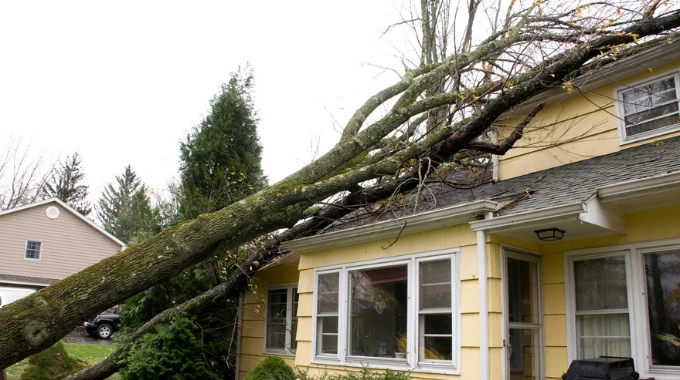
The problem: insufficient or unclear insurance coverage
In practice, we regularly encounter situations where:
- certain parts of a building (for example, the roof, façade, or engineering systems) are not fully insured;
- not all risks are covered (storms, flooding, damage caused by neighbouring construction works, renovation-related damage);
- there is a dispute as to whether the damage qualifies as an insured event at all.
In such cases, repair and restoration costs often have to be covered from the owner’s own funds or jointly by co-owners, creating a significant financial burden.
Solutions: how to act in case of building damage
To reduce risks and improve the likelihood of receiving insurance compensation, the following steps are recommended:
1. Review the insurance policy
Assess whether the policy adequately covers all essential building elements and risks. If necessary, extend the coverage in advance.
2. Engage an independent expert
Accurate assessment of damages is critical. An independent expert report is often a key element in discussions with the insurer.
3. Communicate with the insurer in a structured manner
It is essential to clearly and documentably clarify:
- what is considered an insured event;
- which costs are eligible for compensation;
- whether additional benefits apply (for example, rental costs, utility expenses, or loss of property value).
What if an agreement cannot be reached?
If a dispute with the insurer cannot be resolved through negotiations, before initiating court proceedings, it is advisable to make use of:
- the competence of relevant public authorities,
- independent expert opinions,
- legal assessment of whether the refusal to pay compensation is justified.
In such cases, precision and evidence are decisive factors in achieving a successful insurance payout.
Practical insight
In insurance disputes, success is usually determined not by who is right in principle, but by who can prove their position in a legally sound and well-documented manner.